
Just as you safeguard your physical assets, understanding digital forensics is necessary for protecting your digital life. This comprehensive guide will walk you through the fundamental principles of digital forensics, helping you grasp how tools and techniques are employed to uncover data when breaches or crimes occur. You’ll learn about data recovery, evidence preservation, and how to conduct investigations effectively. By gaining this knowledge, you can enhance your ability to detect potential threats and take proactive measures to secure your vital information in an increasingly digital world. Visit Digital Forensic Squad to learn more.
Key Takeaways:
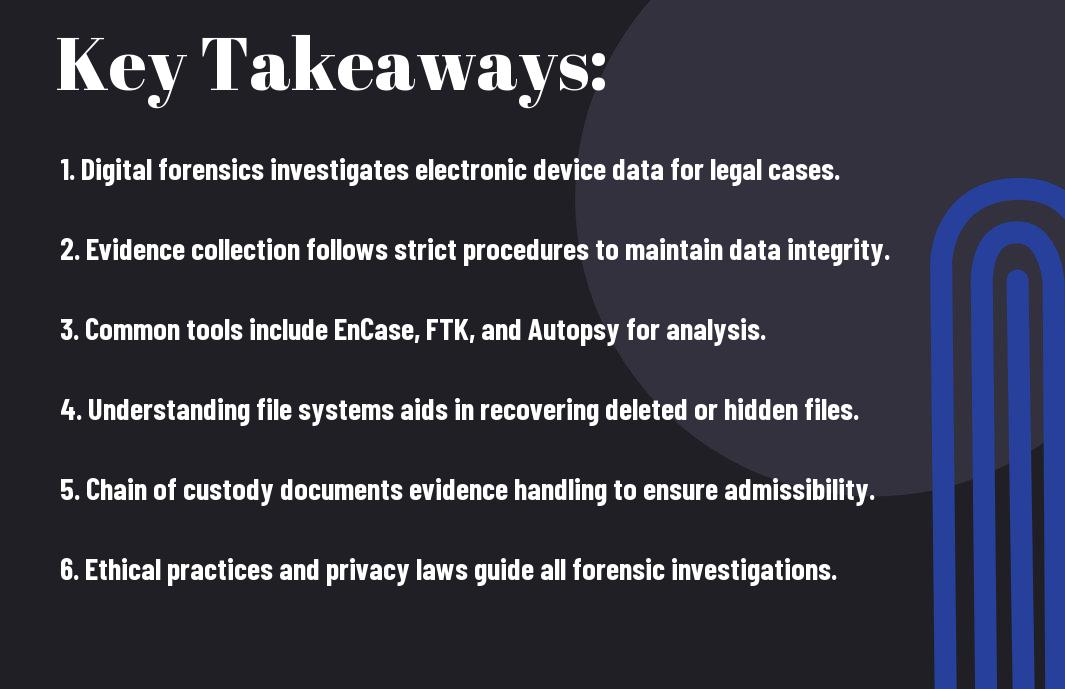
- Digital forensics involves the processes of identifying, collecting, and analyzing digital evidence to support investigations and legal proceedings.
- Knowledge of various tools and techniques for data recovery, analysis, and preservation is imperative for effective digital forensic investigations.
- Understanding legal implications and maintaining chain of custody are vital to ensure the admissibility of evidence in court.
What is Digital Forensics?
Before entering into the intricate world of digital forensics, it’s important to grasp its fundamental purpose: the practice of collecting, analyzing, and preserving digital evidence from various devices to support investigations. Whether it’s a cybercrime, corporate espionage, or personal disputes, digital forensics plays a vital role in uncovering the truth hidden within electronic data.
Definition and Importance
Behind the scenes of every digital forensics case, professionals utilize systematic methodologies to extract and preserve evidence necessary for legal processes. The importance of digital forensics cannot be overstated; it helps in resolving disputes, clarifying incidents, and facilitating justice in an increasingly digital world.
Key Concepts in Digital Forensics
An understanding of digital forensics involves several key concepts integral to the field. These include evidence collection, chain of custody, and data analysis. Each element is designed to ensure the authenticity and reliability of digital evidence, safeguarding it against tampering and misinterpretation.
Definition of key concepts in digital forensics addresses the systematic collection of data and its preservation for legal scrutiny. The chain of custody is vital, ensuring that evidence remains intact from the moment it is seized until it is presented in court. Additionally, data analysis involves using various tools and techniques to extract insights from electronic devices. Together, these elements form a comprehensive framework that supports your ability to investigate incidents effectively and uphold the integrity of the findings.
Types of Digital Forensics
If you’re venturing into the world of digital forensics, it’s important to understand the various types involved in the field. Each type focuses on specific digital evidence, helping to uncover critical information regarding incidents. Here are the primary categories:
| Computer Forensics | Focuses on recovering and investigating data from computers and storage devices. |
| Mobile Device Forensics | Deals with data extraction from mobile phones and tablets. |
| Network Forensics | Analyzes network traffic to gather information about data breaches or attacks. |
| Database Forensics | Involves examining database systems to recover and analyze data. |
| Cloud Forensics | Deals with investigating data stored on cloud infrastructures. |
Knowing the different types can significantly aid you in selecting the right approach for your specific needs.
Computer Forensics
About computer forensics, it encompasses the investigation, recovery, and analysis of data contained on computers and electronic devices. As you navigate this field, you’ll work with specialized software and techniques to retrieve deleted files, inspect hard drives, and analyze various file systems. Effective computer forensics can help you uncover malicious activities, data breaches, or unauthorized access.
Mobile Device Forensics
Forensics pertaining to mobile devices has gained immense importance with the rise of smartphones. In this specialized area, you’ll extract and analyze data from phones and tablets, focusing on call logs, messages, apps, and media files. This process often requires unique tools to bypass security features and retrieve stored information.
Due to advancements in mobile technology, mobile device forensics has become increasingly complex. You must utilize forensic tools that can effectively handle various operating systems, such as iOS and Android, while preserving the integrity of the data. This ensures that you can access critical evidence while adhering to legal protocols and maintaining a chain of custody.
Network Forensics
The field of network forensics focuses on monitoring and analyzing network traffic. You will need to gather data from network packets to identify and address potential security breaches, unauthorized access, or data leakage. This type of forensics is important in understanding both attacks and the overall security posture of an organization.
It becomes imperative to utilize packet capture tools to analyze network packets in real-time. With effective network forensics, you’ll be able to quickly identify anomalies, trace cyber attacks back to their source, and implement remediation strategies. Understanding network behavior is crucial for enhancing your organization’s security measures and prepares you to mitigate potential threats before they escalate.
The Digital Forensics Process
Many people think digital forensics is simply about recovering data, but the process encompasses multiple stages. From identifying evidence to analyzing and presenting findings, each step is vital for ensuring accuracy and legality. Understanding this process helps you get a clearer picture of how investigators dissect digital data to resolve incidents.
Identification
Across various platforms and devices, you must focus on identifying potential evidence. This involves pinpointing locations of relevant data, whether on computers, smartphones, or cloud storage. Effective identification ensures that no vital information is overlooked, laying the groundwork for subsequent steps in the forensics process.
Preservation
Below the identification stage, preserving data integrity is imperative. You should create a complete and unaltered digital copy of the information, safeguarding it against any possible tampering. This includes taking a forensic image of the storage device and documenting all actions taken during the process.
At this stage, ensuring the authenticity of your copies is paramount. By using write-blockers and verified software, you can maintain the original data’s integrity. Proper documentation of your methods and any tools employed will also strengthen your credibility in court or during internal investigations.
Analysis
Around the analysis phase, you utilize various tools and techniques to scrutinize the preserved data. This involves not only recovering deleted files but also examining file structures and user activities. Your goal here is to extract pertinent details that might reveal the context behind the incident.
Digital forensics analysis requires a keen eye and deep technical knowledge. You should utilize specialized software that enables you to visualize data patterns and track user interactions effectively. Through meticulous analysis, you can uncover hidden evidence that could significantly impact the case’s outcome.
Presentation
Analysis culminates in the presentation phase, where you communicate your findings clearly and effectively. Here, it’s vital to create comprehensive reports and visually appealing demonstrations to support your conclusions. Your ability to present evidence succinctly and convincingly can impact legal outcomes significantly.
Further, it helps to explain technical details in a way that is accessible to both legal professionals and laypersons. By using visual aids and clear language, you ensure that your findings are not only understood but also regarded as credible. This step is key in bridging the gap between technical jargon and courtroom comprehensibility.
Tools and Technologies in Digital Forensics
Your journey into digital forensics requires an understanding of the specialized tools and technologies that assist in investigating and analyzing digital evidence. These tools help you efficiently collect, preserve, and examine data from various digital devices, ensuring that its integrity is maintained throughout the investigative process.
Forensic Software
Technologies in forensic software have advanced significantly, enabling you to perform tasks such as data recovery, analysis, and reporting. These applications are designed to handle a variety of digital platforms, allowing for the extraction and analysis of data from hard drives, mobile devices, and cloud services. Popular software solutions include EnCase, FTK, and Autopsy, each offering unique features tailored to specific investigative needs.
Hardware Tools
Behind effective digital forensics, you will find a range of hardware tools designed for evidence collection and analysis. These tools include write-blockers, which prevent data modification during acquisition, and forensic duplicators, which create bit-for-bit copies of storage devices. Such equipment is necessary for maintaining the integrity of data and ensuring accurate results in your investigations.
Another important aspect of hardware tools in digital forensics is their role in achieving physical access to devices. Forensic workstations provide the necessary power and capabilities for analyzing large data sets, while specialized cables allow you to interface with various devices safely. Additionally, using secure storage solutions for preserving evidence can help mitigate the risks of data loss or contamination during handling. Utilizing these hardware tools not only enhances the effectiveness of your investigations but also significantly contributes to the overall reliability of forensic analysis.
Legal and Ethical Considerations
All digital forensics practitioners must navigate a complex landscape of legal and ethical considerations. Understanding these aspects is vital for maintaining integrity in your work, ensuring that evidence is handled properly and that your actions comply with applicable laws. For more information, you can read about Understanding Digital Forensics: A Beginners Guide.
Laws and Regulations
Before you research into digital forensics, it’s imperative to familiarize yourself with the various laws and regulations that govern this field. Different jurisdictions may have specific requirements regarding evidence collection, privacy rights, and data protection. Ensure you stay updated on local, state, and federal laws to ensure your practices are compliant.
Ethical Practices
Between legality and ethicality, you must uphold a standard that respects individual rights, ensures confidentiality, and avoids conflicts of interest. Ethical practices in digital forensics mean conducting investigations with transparency and accountability.
Due to the sensitive nature of digital evidence, ethical practices are a fundamental part of your work as a digital forensic investigator. Upholding professional integrity helps build trust with clients and stakeholders while avoiding potential legal issues. By remaining transparent and respectful of privacy, you can ensure that your actions contribute positively to the field, maintaining the credibility of your findings and the ethical standards of your profession.

Career Opportunities in Digital Forensics
Not only is digital forensics a growing field, but it also offers diverse career paths such as forensic analyst, incident responder, and cybercrime investigator. As technology continues to evolve, your expertise will be in demand across different sectors, including law enforcement, government agencies, and private corporations, leading to a fulfilling career full of unique challenges.
Job Roles and Responsibilities
One of the main job roles in digital forensics involves collecting, analyzing, and preserving evidence from digital devices. You may also be tasked with conducting investigations into cybercrimes, preparing detailed reports, and providing expert testimony in court. Each role will require you to collaborate with other professionals to ensure a comprehensive approach to digital investigations.
Skills Required
Above all, a strong foundation in computer science, networking, and cybersecurity principles will serve you well in this field. You also need to develop analytical thinking, attention to detail, and proficiency with specialized forensic tools and software that enable effective evidence analysis and data recovery.
Plus, honing your problem-solving skills is imperative, as you will often face complex technical challenges that require quick thinking. A solid understanding of legal issues surrounding digital evidence will keep your work compliant and credible. Additionally, communication skills are vital for articulating your findings clearly to various audiences, including law enforcement personnel and jurors. Staying updated with the latest trends and technologies in digital forensics can substantially enhance your effectiveness and overall career progression.
Conclusion
Taking this into account, you are now equipped with a foundational understanding of digital forensics and its significance in today’s technology-driven landscape. By familiarizing yourself with the imperative concepts and tools, you can better navigate the complexities of this field. As you advance your knowledge and skills, you will be better prepared to tackle digital investigations confidently and effectively. Your journey in digital forensics is just beginning, and the insights you have gained will serve as a solid base for further exploration and practical application.
FAQ
Q: What is digital forensics and why is it important?
A: Digital forensics is the practice of collecting, preserving, analyzing, and presenting data in a way that is legally acceptable. This process is imperative in various fields such as law enforcement, cybersecurity, and corporate investigations, as it helps to uncover and document the digital footprints left behind during criminal activities, data breaches, or internal misconduct. By understanding digital forensics, beginners can grasp how digital evidence can be effectively utilized in both legal scenarios and organizational security measures.
Q: What are the primary steps involved in the digital forensics process?
A: The digital forensics process typically encompasses several key steps: 1) Preservation of evidence, which involves making an exact copy of the original data to avoid tampering. 2) Collection of data from various digital devices such as computers, smartphones, or servers. 3) Analysis, where forensic experts investigate the data for any relevant information. 4) Documentation of findings, which involves creating a detailed report that outlines the methods used and the results obtained. 5) Presentation of the evidence in a clear manner, often in court, to support investigations or legal cases. Each step plays an important role in ensuring that the digital evidence is handled properly and can stand up to scrutiny.